Thursday, June 10, 2010

Final Exam

Question: Who is a better model for modern historians: Herodotus or Thucydides? Why?


Theses: Though both Herodotus and Thucydides were both great historians, and both write many books , Herodotus was considered that Father of history, and he placed his facts before the reader, writing what was true.


Primary Source #1:


Among the merits of Herodotus as an historian, the most prominent are the diligence with which he collected his materials, the candour and impartiality with which he has placed his facts before the reader, the absence of party bias and unduc national vanity, and the breadth of his conception of the historian's office

http://www.fordham.edu/halsall/ancient/eb11-herodotus.html

Ancient History Sourcebook:

11th Brittanica: Herodotus


Primary Source #2


Among the best MSS. of Thucydides, the Codex vaticanus 126 (11th century) represents a recension made in the Alexandrian or Roman age. In the first six books the number of passages in which the Vaticanus alone has preserved a true reading is comparatively small; in book vii. it is somewhat larger; in book viii. it is so large that here the Vaticanus as compared with the other MSS., acquires the character of a revised text

http://www.fordham.edu/halsall/ancient/eb11-thucydides.html>

Ancient History Sourcebook:

11th Brittanica: Thucydides


Primary Sauce #3


This part of Herodotus' History tells a famous story of the encounter between the Lydian King Croesus, reckoned as one of the richest men in the world, and Solon, the wise Athenian.

When all these conquests had been added to the Lydian empire, and the prosperity of Sardis was now at its height, there came thither, one after another, all the sages of Greece living at the time,

http://www.fordham.edu/halsall/ancient/herodotus-creususandsolon.html

Ancient History Sourcebook:

Herodotus: Solon and Croesus, from The Histories


Argument: Herodotus and Thucydides were both great authors and historians, but Thucydides books where not always preserved correctly, according to source one, and Herodotus wrote from no view, he wrote the facts, not letting anyone influence him according to primary source two. One good example is primary source three, his book about the Lydian king, which was written from the view of an outsider.

Final Exam

    Question: Considering all of the conflict of the first century BCE, was Rome better off as an 'empire' than as a republic?


    Theses: Rome had power over many places as both e Republic and as an Empire, though while empire was an faster way of getting things done, Rome was better off as a Republic because there was more order, and with more people, they were sure to look out for the common good.


    Primary Source #1:


    Roman rule was established in Egypt after Octavian (Augustus) displaced the last ruler of the Ptolemaic line, the famous Cleopatra VII. It proved to be a great and rich province for Augustus, who organized the country not so much as a Roman Province but as the emperor's own special domain land. In Egypt, the Emperor was considered the successor of the ancient Pharaohs; his deputy - the prefect - ruled the country with an authority permitted to few other governors.

    Pasted from <http://www.fordham.edu/halsall/ancient/romanegypt1.html>

    Ancient History Sourcebook:

    Egypt under the Roman Empire


    Primary Source #2:


    Roman System -- based on balance of interests

    Monarchical

    Aristocratic

    Democratic

    2 Consuls

    + other magistrates

    Senate

    Assembly of Tribes

    Tribune

    Directed government and army

    Acted as judges

    Could issue edicts

    Acted as chief priest

    Controlled state budget

    Could pass laws

    Approved/rejected laws

    Decided on War

    Tribune could veto actions of magistrate

    Acted as final court

    Basis of power:

    possess imperium, the right to rule

    need for leadership

    Basis of power:

    members were richest men in Rome.

    Basis of power:

    provided most of the soldiers

    Limits on power:

    one year term

    each could veto

    Limits on power:

    could not control army

    needed majority as soldiers.

    Limits on power:

    Could not suggest laws

    often paid as clients by the elite

    http://www.fordham.edu/Halsall/ancient/rome-balance.html

    Ancient History Sourcebook:

    The Roman Republic: Checks and Balances


    Primary Source #3


    THE THREE kinds of government, monarchy, aristocracy and democracy, were all found united in the commonwealth of Rome. And so even was the balance between them all, and so regular the administration that resulted from their union, that it was no easy thing to determine with assurance, whether the entire state was to be estimated an aristocracy, a democracy, or a monarchy. For if they turned their view upon the power of the consuls, the government appeared to be purely monarchical and regal. If, again, the authority of the senate was considered, it then seemed to wear the form of aristocracy.

    http://www.fordham.edu/Halsall/ancient/polybius6.html

    Ancient History Sourcebook:

    Polybius (c.200-after 118 BCE):

    Rome at the End of the Punic Wars

    [History, Book 6]


    Argument: Rome ruled over many places while it was under the rule of a King, such as the rule over Egypt according to Source One, but by looking at source two, they had a very good system, such a system such as the checks and balances, the Republic was more organized, and the people got a say in what happened in their government. This made them balanced and a union, according to source three. With one king in Rome, there was always fighting over the throne, with a republic, everybody could have a part.

Final Exam

Question: Were the Vikings "barbarians"?


Theses: Vikings, also called Northman, were ravages who captured ships, and killed men, while not all Vikings were barbarians, such as Leif who may of discovered America, most were, killing to get what they want.


Primary Source #1:


After the sixteen winters had lapsed, from the time when Eric the Red went to colonize Greenland, Leif, Eric's son, sailed out from Greenland to Norway. He arrived in Drontheim in the autumn, when King Olaf Tryggvason was come down from the North, out of Halagoland. Leif put into Nidaros with his ship, and set out at once to visit the king. King Olaf expounded the faith to him, as he did to other heathen men who came to visit him. It proved easy for the king to persuade Leif, and he was accordingly baptized, together with all of his shipmates. Leif remained throughout the winter with the king, by whom he was well entertained.

http://www.fordham.edu/halsall/mod/1000vinland.html

Modern History Sourcebook:

The Discovery of North America by Leif Ericsson, c. 1000

from The Saga of Eric the Red, 1387


Primary Source #2


of vikings, and they fought against them, and captured all the ships, and slew the men. When they werere turning homeward with the booty, a great naval force of vikings met them, andthen fought against them on the same day, and the Danish gained the victory. In the same year, before midwinter, Carloman, king of the Franks, died, and awild boar killed him; and one year before his brother died

http://www.fordham.edu/halsall/source/angsax-chron1.html

Medieval Sourcebook: The Anglo-Saxon Chronicle on Alfred the Great


Primary Source #3


Pirates of the Northmen's race came to Nantes, killed the bishop and many of the clergy and laymen, both men and women, and pillaged the city. Thence they set out to plunder the lands of lower Aquitaine. At length they arrived at a certain island [the isle of Rhé, near La Rochelle, north of the mouth of the Garonne], and carried materials thither from the mainland to build themselves houses; and they settled there for the winter, as if that were to be their permanent dwelling-place.

http://www.fordham.edu/halsall/source/843bertin.html

Medieval Sourcebook:

Three Sources on the Ravages of the Northmen in Frankland, c. 843 - 912


Argument:

In source one we see that the Vikings may of made some discoveries, such as America By Leif Ericon, who was not a ravage. Though some Vikings were not as ravage as some others, most were still violent. By looking at Source Two and Three, we see that there was a lot of taking objects that were not theirs, and a lot of killing men who did not deserve to die.

Final Exam

Question: Describe the significance of the Battle of Tours.

Theses: The Battle of Tours was perhaps the turning point in history because without it, Muslim religion would of still be spreading, and would of destroyed Christian belief, therefore, leaving no Christian faith left to flourish.

Primary Source #1:

"The defeat of the Saracen invaders of Frankish lands at Tours (more properly Poitiers) in 732 A.D. was a turning point in history. It is not likely the Muslims, if victorious, would have penetrated, at least at once, far into the north, but they would surely have seized South Gaul, and thence readily have crushed the weak Christian powers of Italy. It is very unfortunate that we do not possess scientific accounts of Charles Martel's great victory, instead of the interesting but insufficient stories of the old Christian chroniclers."

http://www.fordham.edu/halsall/source/732tours.html

Medieval Sourcebook:

Arabs, Franks, and the Battle of Tours, 732: Three Accounts

Primary Source #2:

"But such defect of discipline always is fatal to armies. So Abderrabman and his host attacked Tours to gain still more spoil, and they fought against it so fiercely that they stormed the city almost before the eyes of the army that came to save it; and the fury and the cruelty of the Moslems towards the inhabitants of the city were like the fury and cruelty of raging tigers /But it seemed as if they fled; and all the host was troubled. And while Abderrahman strove to check their tumult, and to lead them back to battle, the warriors of the Franks came around him, and he was pierced through with many spears, so that he died. Then all the host fled before the enemy, and many died in the flight. . . . "

http://www.fordham.edu/halsall/source/arab-poitiers732.html

Medieval Sourcebook:

Anon Arab Chronicler: The Battle of Poitiers, 732

Primary Source #3

"he was by necessity compelled to confese what he had before willfully denied.

It happened that the two armies were in battle and there was great slaughter."

http://www.fordham.edu/halsall/source/gregtours1.html

Medieval Sourcebook: Gregory of Tours:

Argument: According to source one, The battle of tours stopped the advancement of the Muslim religion, and left Christianity alone. If Christianity had been put in a battle, it was so weak, it would of be demolished, and there would, most likely, not longer be a Christian Religion. According tow sources two and three, this battle was also memorable because many men gave their lives to stop the advancement of the Muslims.

Final Exam

Question: What were Michelangelo's influences? Consider his works in fresco, sculpture, architecture, poetry and underlying humanist beliefs


Theses: Michelangelo's influences for his artwork came from many places, such as looking at the beauty in nature, looking at the was humans work, or maybe he just drew what he saw when he was under the pressure of doing well when his rival, Leonardo Da Vinci were on the race for the best painting.


Primary Source #1:


"The greatest gifts are often seen, in the course of nature, rained by celestial influences on human creatures; and sometimes, in supernatural fashion, beauty, grace, and talent are united beyond measure in one single person, in a manner that to whatever such an one turns his attention, his every action is so divine, that, surpassing all other men, it makes itself clearly known as a thing bestowed by God (as it is), and not acquired by human art. This was seen by all mankind in Leonardo da Vinci, in whom, besides a beauty of body never sufficiently extolled, there was an infinite grace in all his actions; and so great was his genius, and such its growth, that to whatever difficulties he turned his mind, he solved them with ease. In him was great bodily strength, joined to dexterity, with a spirit and courage ever royal and magnanimous; and the fame of his name so increased, that not only in his lifetime was he held in esteem, but his reputation became even greater among posterity after his death"

http://www.fordham.edu/halsall/source/vasari1.html

Medieval Sourcebook: Giorgio Vasari: Life of Leonardo da Vinci 1550


Primary Source #2


"Michael Angelo was at this time fourteen years old, and he made such progress that he astonished Domenico, who saw that he not only surpassed his other pupils, of whom he had a great number, but often equalled the things he did himself. It happened once that one of the boys who was learning there had copied with a pen some women out of one of Ghirlandajo's works, and Michael Angelo, taking the paper, with a thicker pen outlined one of the women again, as she should have been drawn."

http://www.fordham.edu/halsall/basis/vasari/vasari26.htm

Michael Angelo

Giorgio Vasari's Lives of the Artists


Primary Source #3


"also Michael Angelo's works and Michael Angelo himself, then living in Rome. He went therefore with some of his friends, but having seen all that he desired, returned to Florence, considering wisely that the works there were too profound for him, and should be seen not by beginners, but by those who have greater knowledge of art. Nevertheless after more study he returned again to Rome, and spent there a year making many things worthy of memory, and for his friend Luca Martini he made a copy in wax of Michael Angelo's Moses"

http://www.fordham.edu/halsall/basis/vasari/vasari14.htm

Lionardo da Vinci

Giorgio Vasari's Lives of the Artists


Argument: In source One we see that nature has a lot to do with what they were drawling., such as it's beauty and grace. Also, looking at source two and three, you can see that he may of beeen influenced by his life, and all the things and places that he went.

Final Exam

Question: Describe the importance of water in the ancient world

Theses: Water made living during the ancient world possible. Water brought life to lands, water the orchards that aloud humans to live, and was also was used to protect people against the devil.

Primary source #1:

Hail to thee, O Nile! Who manifests thyself over this land, and comes to give life to Egypt! Mysterious is thy issuing forth from the darkness, on this day whereon it is celebrated! Watering the orchards created by Re, to cause all the cattle to live, you give the earth to drink, inexhaustible one! Path that descends from the sky, loving the bread of Seb and the first-fruits of Nepera, You cause the workshops of Ptah to prosper!

Ancient History Sourcebook:

Hymn to the Nile, c. 2100 BCE

http://www.fordham.edu/halsall/ancient/hymn-nile.html

Primary Source #2

Then he shall designate a spot in the vestibule where the fire is to be made for the water, and shall first sprinkle the place with holy water, and shall also sprinkle the kettle when it is ready to be hung and the water in it, to guard against the illusions of the devil. Then, entering the church with the others, he shall celebrate the ordeal mass. After the celebration let the priest go with the people to the place of the ordeal, the Gospel in his left hand, the cross, censer and relics of the saints being carried ahead, and let him chant seven penitential psalms with a litany.

Medieval Sourcebook: Ordeal of Boiling Water,

12th or 13th Century

http://www.fordham.edu/halsall/source/water-ordeal.html

Primary Source #3

was in Portugal, in 1484, there came a person to the King from the island of Madeira, soliciting for a vessel to go in quest of land, which he affirmed he saw every year, and always of the same appearance. He also says that he remembers the same was said by the inhabitants of the Azores and described as in a similar direction, and of the same shape and size. Having taken in food, water, meat and other provisions, which had been provided by the men which he left ashore on departing for Grand Canary to repair the Pinta, the Admiral took his final departure from Gomera with the three vessels on Thursday, 6 September

Medieval Sourcebook:

Christopher Columbus: Extracts from Journal

http://www.fordham.edu/halsall/source/columbus1.html>

Argument:

Without the water people could not live. According to source one , the Nile played a huge role in keeping the system of life going because without water the plants could not grow, which would make the animals die. According to source two, water was used by priest to repel evil, and the devil from entering places. Finally the last source was a repetition of Columbus saying that water was a needed to live.

Wednesday, June 2, 2010

Summery of Livy's history of Rome

After the Trojans were killed, Aeneas and Antenor refused to cooperate. Together the Trojans and Enetians defeated Euganai. the name Troy is becoming common. The Trojans began plundering many neighborhoods. Soon the Aborigines occupied the country with their king Latinus. Apparently he was later defeated in battle and made peace with Aeneas. It was also said that they were going to fight. since the city of Troy was destroyed a treaty was signed to keep peace. a town was built called Lavinium after Aeneas' wife. Soon the Trojans and Aborigines were at war with Turnus. Lavinia declared war on Latinus and Aeneas. After the loss of Latinus, a king said that the Trojan state was becoming too powerful. Aeneas trusted his forces and led them onto the field. It was his last act before his death. Aeneas' son, Ascanius took his thrown. The growth of the Latin power began. Ascanius' son Silvius took the thrown after his death. Then he had Aeneas Silvius who had Latinus Silvius. Latinus Silvius had Alba, Atys, Capys, Capetus, Tiberinus who drowned. then came Agrippa and he had Romulus Silvius. He was struck by lightning and Aventinus took the thrown. Proca was next who had Numitor and Amulius. Numitor was a very violent person and caused many problems. the Vestal was violated and had teins. Mars was named as the father. The twins were ordered to be thrown in a river. My luck the twins were able to stay afloat and were saved by a she-wolf. Larentia brought the children up. When the twins were grown up they spent their time hunting. Romulus and Remus joined the Lupercalia festival which was on Palentine Hill, where man ran about naked playing sports. Romulus was able to defend himself but Remus was taken prisoner. After Romulus found about this he killed the king. One day Numitor saw an enemy attacking the palace and he drew soldiery to come defend the palace. Then many people came to congratulate him and he then became king. He told Romulus and Remus to build a city. They were twins so no one had more authority because of who was older so they went to the tutelary deities to find out whose name the city would be after and who would rule the city. Both of them got omens and they fought over whose omen was better. Remus was killed and Romulus became the king and the city was named after him. He was talking about how to worship gods and he had a story about Hercules. After they figured out their religion Romulus called a council and he gave them laws and created senators.

Tuesday, June 1, 2010

Summery of The End of the Republic

Rome, when it first started out was rules by kings.
Freedom and consulship were established by Lucius Brutus. The power of a Roman law maker did not last past two years. The rule over the tyrants by Cinna and Sulla did not last long. The rule of Pompey and Crassus happened before Caesar came to rule. The time of Rome with all its successes was recorded by famous historians, but they did not want to record the rule of Augustus, until the growing "sweet talk" scared them away. The history of Tiberius, Caius, Claudius, and Nero, while in power, where falsified (to alter something in order to deceive) because of terror and their death was written because of the hate for them.

Now the writer of this is going to tell us a few more details about Augustus-more like his last acts:
After the destruction of Brutus and Cassius, there was no longer an army of the Republic. Augustus won over the soldiers with gifts, the population with cheap corn, and all the men with sweets of repose. Augustus grew greater. He concentrated on the functions of the Senate, the magistrates, and the laws. Augustus was unopposed, because those who would of, had fallen in battle, while the remaining nobles, the readier where slaves. When they improved their status by revolution, They preferred the safety of the present, then the unknowing and dangerous past. The provinces did like the state of things also, because they distrusted the Senate and the people, because there were rivalries between the "leading man" and the officials. The laws were useless, and they were continuously damaged by violence, intrigue, and corruption.


http://ht.ly/1SwEx

Wednesday, May 26, 2010

Other

Johann Gutenberg Print the Bible for the first time in 1455
The hundred years war is broken into three parts
1. The Edwardian Was 13337-1360
2. The Caroline War 1369-1389
3. Lancastrian War 1415-1429

Review

Mesepotainia
Ziggurat is a Sumerian temple (when the were found, they looked just like hills). Genesis 2:10-15. Eden is in Mesopotamia. It is about 120 degrees F. They have the first writing system and the first law, the law of heterodyne, and they are considered the first civilization. All the major cities are near water, because they is important to survive.

Egypt.
They say that Egypt was a death oppressed place, look at the pyramids, they are tombs and the put all their money into the cities of the dead. The life force, CA, it was important to prepare the body, so it was easy fro the CA to leave the body so that they could go into the after life. The paintings on the walls show what the person likes the most. When the Ca is finally called into the after life, they had judgment where the its heart was weighed against a feather. If your heart weighed more the soul would be destroyed.
The flood makes the land adjacent to the fiver very fertile. It was the job of the pharaoh to make sure that it rained enough for the river to flood. He takes about how the pharaoh becomes a symbol for how the river floods and floods again, if it does not flood the pharaoh mat be in some trouble. For four months out of the year the location changes while the river floods.

Greece
The Melina's. King Minnows and in the lower chambers where a maze that lived a "half man held bull". He demanded a annual sacrifice of girls and boys. One time a volcano erupted that cause a giant wave, then center island to go under water, and later the land was unable to harvest because the gasses caused the climate to change, and ash full of sulfuric acid landed on their farmland.

Troy
One thing that people can not understand that if or not that the war actually happened, then they had a Trojan horse, that the people hid inside, the people sneak out and then they open the gates and then the Greek people are outside of gates ready to attack. Some people think that an earthquake made the city fall. There is a theory that the Trojan horse is a symbol for the earthquake. In the late 1890's uses the text and works it out like a map, an he uses the story to find the city of Troy, and he finds it.

Futile system

The futile system is the order of how the people are rated such as a duke, or a peasant. Once you were born as something, such as a peasant, that is what you always were. There was no moving up the social ladder like there is today in America. The middle ages where a time of very superstitious people. Events that were known as super natural occurred a lot during the middle ages. They deviled that world into three category, the ones who prayed, the ones who fought, and the ones who worked. A peasants life was worth 6 times less then noblemen.

Henry the 8th

Henry the 8th refused a divorce from his wife by the Pope so he splinters off the Roman Catholic church.
Spain was the center of the holy empire. Was the new center of Europe. Power and religion were build together to create a wonderful palace.
Adam looks at Eve to the tree man who looks like Adam
More art was created in the Renaissance than had been created in the Roman Empire.
The art is complicated but has a sophisticated meaning. Medieval art was  simple and explanatory.
Renaissance art is complicated and confusing

Florence part I

In Florence in 1400 was a city unlike any other. It was a trading center that was a republic. It was the place to be. A growing business was managed by the father. He chose his helpers very careful, because he was looking for trust. Baracenacos was a pirate who had missions to enter the church and become pope himself, all he need was a fund. Coosa even had a chance with Jovian. The bet with the pirate finally made a work, because then he was became the pope. And he remember his friends with the Mariachi, and they became one of the most powerful banks. For over 100 years an unfished cathedral was waiting. There was no dome on top. The Medici family thought that if they finished the dome, they could bring honor to the family. Felipe Bilaliski was someone who had a great mind but no one could understand. The Medici family had no problem with they guy's temper. In 1419 and orphanage became a showcase for his work. His work sparked an arcutecture spark around the world. The Medici family did the things that all powerful families did. Next Brunoeski started his work on the Dome. He wrote his planes in code, and told no one of his works. He used the example of the planes as a egg that was cracked that could stand up. He thought of a ingenious idea that no one has ever thought about before for the building of the dome. Jovian health started to fail as the dome started to start to heighten. In 1429 Jovian died. His death casted a shadow over the family. His son had to now take the job of the Dome. Cosmo transported large sums of money out of the city so that his family could be safe. The Cosmo was commanded to go upstairs, and now he was in grave danger. He was at there mercy of his enemies. A referencing was called to decided Cosmo's future. Cosmos was found guilty of treason. Cosmo had survived and his family was now banished. Florence was no longer safe. The Medici bank was the center, but since Cosmo left, the businesses fell. They attacked the government building. Cosmo had very powerful friends, and agents of the pope went, and now Cosmo's exile was no over. Cosmo was offered control over the city. The bad people were executed. Brunoeski lead his workers back to the Dome, and the Medici bank continued to grow. On behalf of the church the Medici collected money from all of the churches. The pope himself open a line enough to buy 10 palaces. Wealth had never been enough for cosmos, he then started to get the greatest craftsman of the ages. Cosmo the Medici became the most sought after man in Florence. There were no public art markets in Florence. Some times payment was not enough to get the painting. Cosmo decided that you get better work out of people when they are happy.

Part II

The Pasties decided to take matters into their own hands. They settled on a plan to eliminate the Medici family. Rumors of the conspiracy spread, and a new planned. Sunday April 26, Easter, the Medici gathered to celebrate. Juliano was stabbed 19 times, and died instantly, but Lorenzo was not there. The plotters realize that the game is up, and the Medici were ready to kill at any moment. Violence went through Florence as supporters of the Medici were outraged. Medici power now hung by a thread. Lorenzo heard that the pope decided to wipe out the Medici finally. The people of Florence worried about Lorenzo's life. Lorenzo arrives in Naples with peace and gifts. The enemy troupes were called off. Lorenzo had saved Florence from destruction. He adopted the hair of his brother, because they needed all the heir they could get. Now that Florence was under control, Lorenzo used his wealth and power to use great things. Lorenzo met an artist who soared above all others. His name was Leonardo DeVinci. In the battle, Leonardo's ravel was raising the stakes. His rival made the picture Venus, which was unlike any other picture there was. This ne guy turned all his hate towards Lorenzo, because he hated everything he did. In July, Lorenzo's wife died of TB. Lorenzo found Solace in art. In 1488 he established the fist art school. Micoangolo was thirteen when he started working with marble. Lorenzo decided to make Micoangolo into his home. Micoangolo listened at the table and it showed in his art work. Micoangolo decide that that the influence of the Medici on his was making head in the wrong direction. Florence was split, people who liked the town, and people who thought that the town was off track. Lorenzo loosened his grip on the family business. The Family's network was falling apart. They stopped coming through with their friends. Lorenzo friends could see that the person's predictions were coming true. In 1492 Lorenzo became serious ill. Lorenzo knew that he was dying, and he needed something that money could not buy. The dude told Lorenzo he was going to hell. At the age of 43, he died, fearing hell to his last breath. The future teller seized his chance. Prostitutes where beated, and homos burned. Any jewelry showed was banned. He wanted to created the kingdom of earth, by any means. They burned books, wigs, makeup, and other things. One artist hauled his own paintings into the flames. Florence was in search of salvation.

Elizebeth I

1559 when she was 25, is when she first became queen. Her childhood made herself who she was today. She was the daughter of King Henry the 8th and his wife. When she was 3 months old she given her own house. Mary was her half sister. Mary was very unhappy. There was tension and Mary refused to take second place. Her mother Anne told what Elizabeth should wear. In 1534, there was a declare that only his of spring could become the heir. Ann knew that the days of her being wife were over. Ann was sentence for death. Within two weeks Henry married another women. Mary became much nice to Elizabeth. Then Jane gave birth to Edward. Then died. Later Henry married his 6th wife. Even at the age of 8 she knew how to act in public and she knew how to sew. She was fascinated in her father's power. By 1547 Henry aged very fast, he was over weight, had a temper, and suffered from Blood clots. Then maybe he died. From childhood she knew what it was like to deal with two faced people. Elizabeth was at the age of 14 an orphan. When Henry died, his son was to young to rule. The Tutors always wanted power. Thomas was the one time love of Catharine. Thomas moved in with Catharine and Elizabeth. Thomas abused her, he was 40 and she was early teenager. Soon after Catharine died after childbirth. Rumor had it that she was pregnant and she was going to marry Seamore. Her brother would not talker to her. Then the man she liked was put to death, and her servants were interrogated. Once the Seamore rumors stopped, she could talk to her brother again. In the second half of Edwards rain, but he became ill. They were afraid Mary would become Queen. When Edward died, his death was kept secret until their plan was set. Lady Jane and her son where executed, and Mary became Queen. Elizabeth laid low. She was next in line after Mary. People where at first happy with Mary, then when she turned that country into a catholic town, they did not like that . Mary wanted to marry Philip. Mary's plan to turn the country into a catholic city started. Elizabeth was kept in a tower for two months, then under house arrest for 16 months. The meeting between Mary and Elizabeth was important. After they were reconciled. Mary saw that her marriage to Philip brought the city to the lowest point. Mary died at 7 o'clock in the morning, six days after Mary's death, she went to England to start her rein. She was 25 years old with airborne hair. She had a quick temper. And she loved setting time aside for dancing. She flaunted her a availability. The only contender was Robert duly. He was married but his wife was found dead at the foot of the stairs. Because of the way she died, Elizabeth could not marry him because of suspicion. Elizabeth but Mary on trail, and in 1587 Mary was beheaded. They were in a new area, the Elizabethan age. She had an affair when she was 52 and he was 19. Essex was set for execution, and she sat in her chamber. A few weeks later she decided that James the 6 of Scotland should succeed her. "SHE DOXED MANY THINGS". She was 69 when she died. She was buried with many of her objects and many of her supporters where crying. She had left the country with all the problem that she ignored which included many things sich as money problems, and problems with congress. She will always be remebered as the women who story inspired people. She had everything that women wanted, love, making something of her life, and dying in peace in her bed.

Martin Luther

Germany 1483. A place where the plague could wipe out times, and a quarter of children died before they were five. The church promised them heaven which made everyone have hope. Martin Luther grew up in Germany, The church said that if you followed its rule, you would find eternal happiness in heaven. The church declared many things such as marriages, and births. Martin Luther first embraced the church, and then he was an alter boy and sag in the choir. His father was a metal smelter. His father wanted Martin to climb up higher on the social latter and become a lawyer. Luther's mother was not that sympathetic. He had fear toward his parents. At first Luther followed the path for him, and at the age of 18 he applied for college. At college, Luther became a musician. Luther got his batchoulers and masters. All he had to do was take a test, and he would become a lawyer. In the year 1505 the plague stuck the college. The black death killed three of his friends. Luther was caught in a massive thunderstorm. Luther changed through the thunderstorm, and he vowed himself to God. He stuck a barging. He said he would become a monk. His father was very unhappy that his son was not going to become a lawyer. The monasteries where a society of their own . There food was very simple and their clothes were very uncomfortable. Luther thought the only way to receive salvation was give up everything he knew. He had been welcomed into the very center of the catholic church. He soon graduated from the white robe to the confirmed black robe. He said that the years in the monasteries permently ruined his health. Luther thought that he would never receive salvation. Five year he labored. Later he was sent on a pilgrimage to Rome. Rome was a very important place for salvation. In October in 1510 he finally arrived at the city. Luther arrived in Rome as the Renaissance were in height. The city was as much about money as about religion . He reported that when he tried to preach, the priest next to him said "just get on with it". He found 46000 Christian martyrs. Purgatory was were people could've a chance to burn out their sin, for thousands of years. The church was selling things that sound time out of Purgatory. Luther did not have a feeling of god loving him any better. Life in the monestary left less salvations then before.

Part III and IV

Micoangolo started working on a 13 foot thing of marble. 15 years earlier he moved in with the Medici. He was exposed to a world of artistic work. He was raised among the heirs of the Medici. He watched as they prepared a guy for the kingship. A bloody Civil war sparked in the streets because people were jealous of the Medici's wealth. The heirs were casted into exile. The city of Florence placed a price on both of the cousin's heads. On the 25 of January, Micoangolo was ready for the world to see his marble masterpiece. Every agreed that is was a monumental step forward, so they decided that I should be put outside the town hall. After nine years Jovian and Julio went to Rome. The pope was sympathetic to the Medici so they assembled assembled an army to go back to Florence. Leonardo studied the detail for the human body, and did not miss any detail, but he new Micoangolo was a commentator. They both were given a wall to decorate of the battles. By 1512 thousand of armed solders were inside Tuscany, getting closer to Florence. Florence knew they were hopelessly outnumbered. Just a few miles away, after the massacre, the people of Florence gave in. The Medici were back, but no one trusted the Medici. Later they received news that their pope was dead. Cardinal Javari was now pope Leo the X. His acceptance to the papacy now changed everything. For the first time the Leader of the Catholic church was born in Florence. They painted a boy for the celebration, to represent the Golden Age, but later the child died because of paint poisoning, but his death went unnoticed. Micoangolo was forced into painting the Sistine Chapel ceiling, which he thought that he would fail. He created some of the most amazing art during that time. They wanted him to make the tombs for the dead Medici Family, and now he had no make sculpture for him. Soon Leo the X owed each bank some money cause he used it all within the first year. They then started selling indulgences, which was something they sold that would forgive people of their sins. Marting Luther was horrified about what he saw.

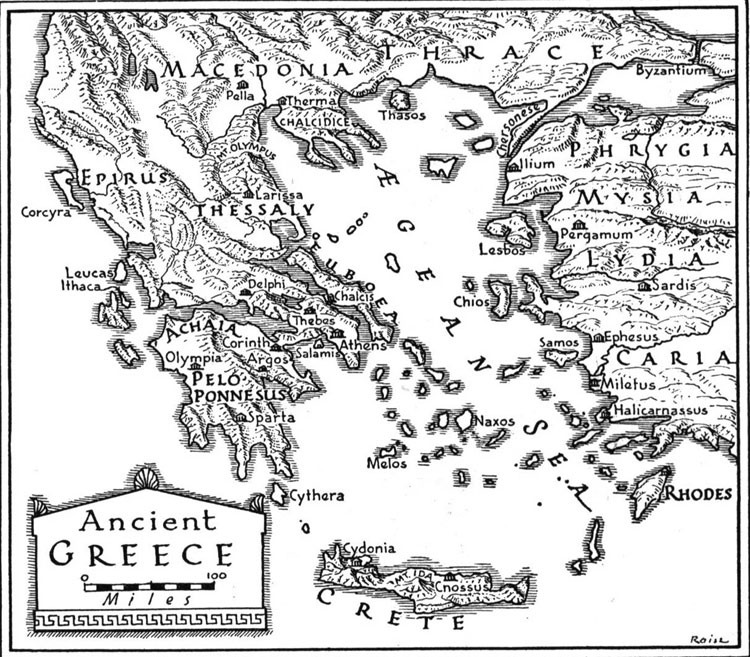
Map of Greece

Tuesday, May 25, 2010

Code of Hannurabi Law

Create your own video slideshow at animoto.com.

Friday, May 21, 2010

In his mind, how do you think Michaelangelo justified turning on the Medici?

I think he justified it by thinking that because the Medici were exiled, they would not be coming back to the town, therefore the Medici would never know the he turned on them. Also maybe he thought that if he associated himself with the Medici while there were in exile, nobody would ever buy any of his work because he was associated with people the town did not like. Most likely, I think tat Michelangelo was thinking more about himself when he turned on the Medici, then thinking about the family that brought him up.

http://commons.wikimedia.org/wiki/File:Michelangelo.jpg